CASE STUDY
Fresh & tasty food,
straight to your office.

Benefit App
⎯
App for ordering lunch
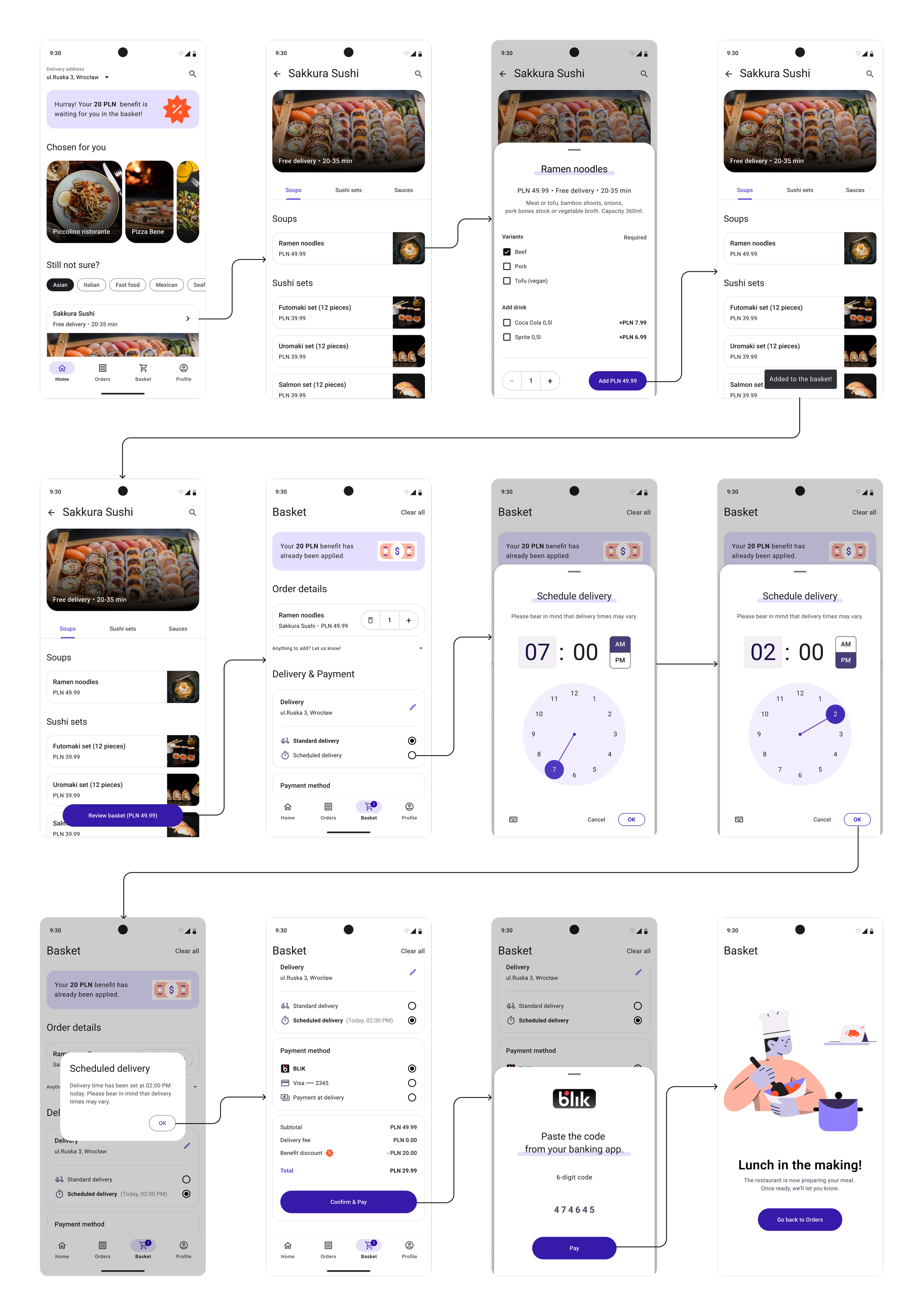
Below case study highlights the development of a lunch ordering application tailored to the needs of office workers seeking to utilise their employee benefits effectively.
Objective
My objective was to design a part of a mobile application that facilitates the ordering of lunch for office employees as part of their workplace benefits package. The application will be developed for Android devices.
My role
As a product designer, my responsibility was to craft an application interface that facilitates seamless dish selection and ordering for users. A paramount consideration was ensuring a user-friendly payment process. Users are empowered to order lunch for themselves at a designated time, with the option to utilize a daily employer subsidy of 20 PLN. This subsidy would be allocated at the end of each workday, with users required to cover any remaining balance independently.
User Experience & Design process
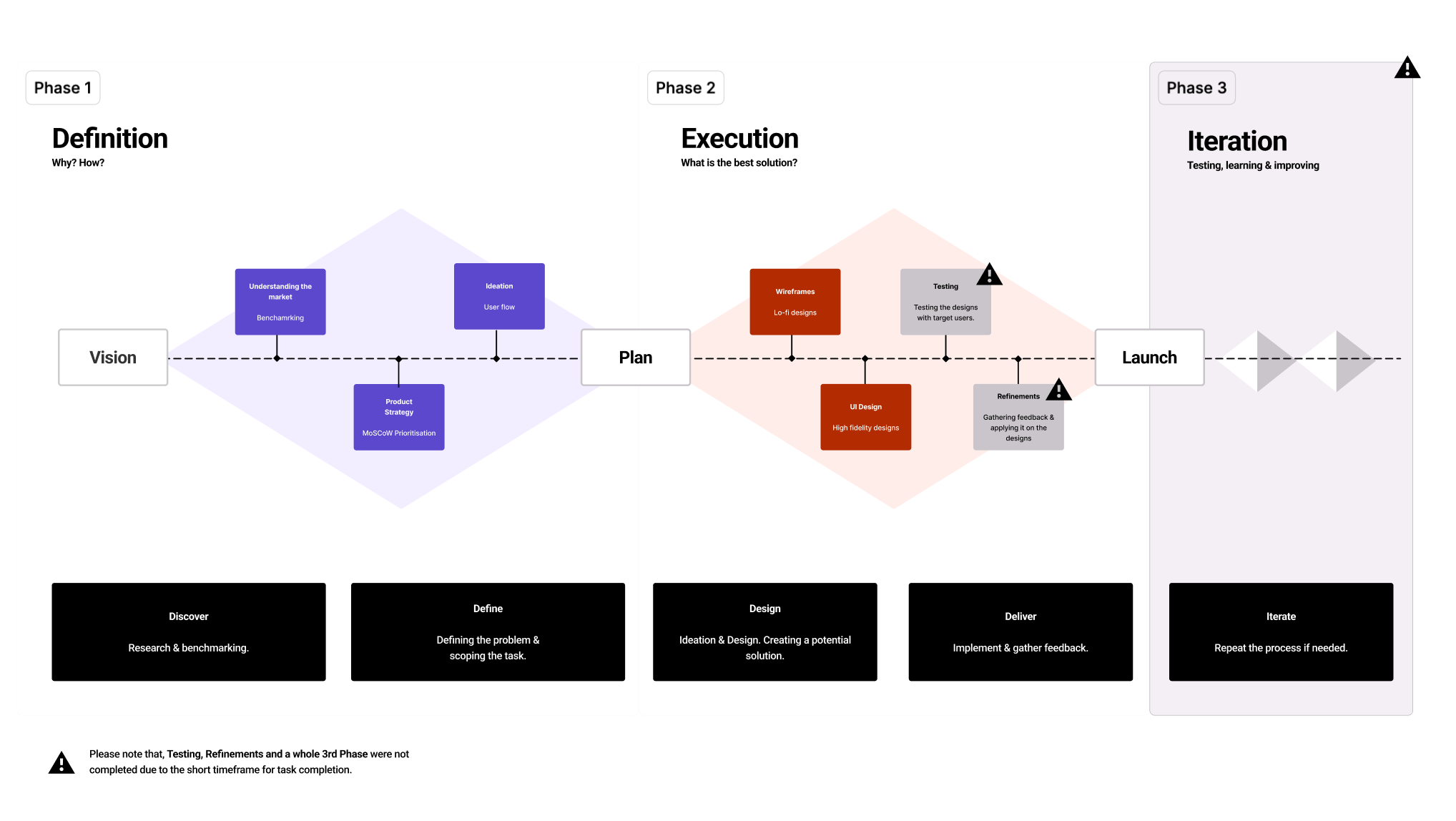
In my design work, I rely on the Double Diamond method and the Design Thinking approach. I've divided it into three main phases:
Definition
In this phase, I focus on a deeper understanding of the problem and scoping the task.
Execution
After defining specific goals, I move to the execution phase, where I turn ideas into actions.
Iteration
Finally, I evaluate and iterate on the solutions created. Using user feedback, I refine the project.
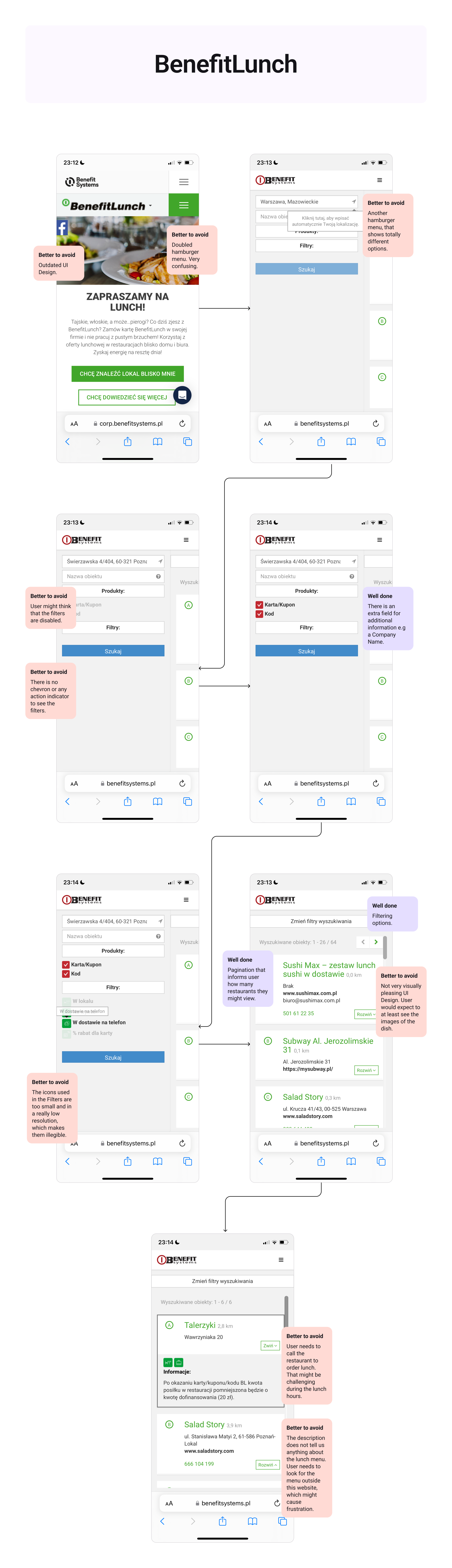
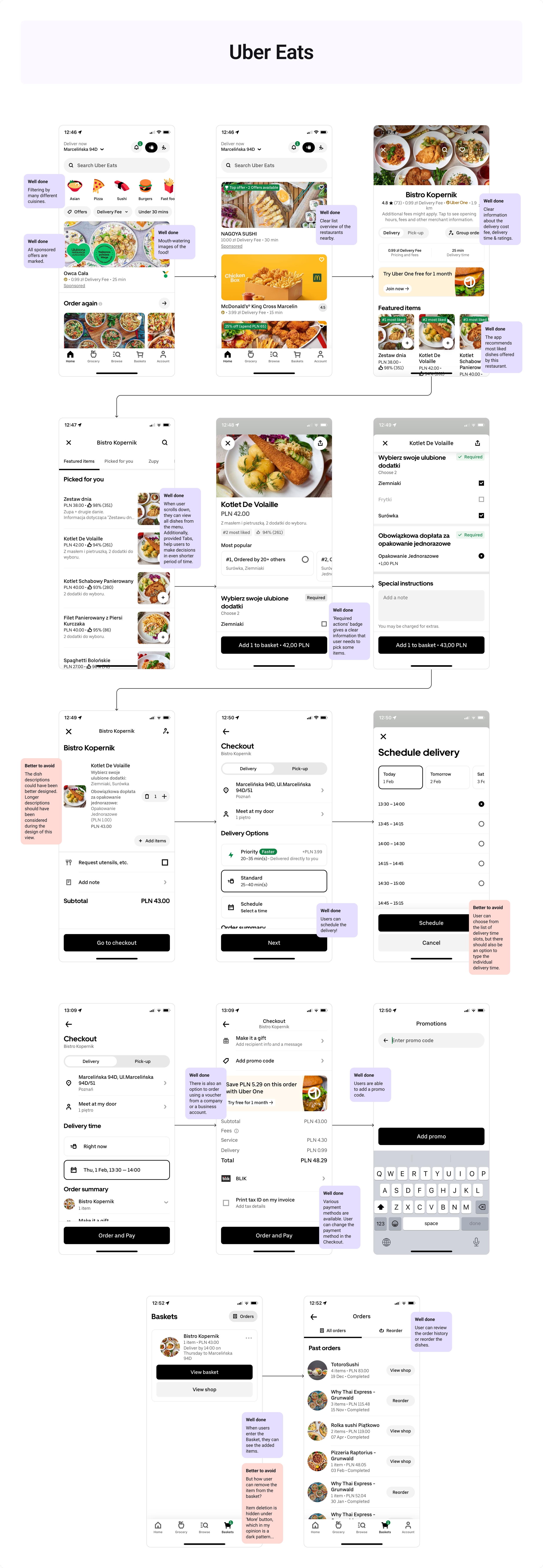
BENCHMARKING
Understanding the market
PRODUCT STRATEGY
MoSCoW Prioritisation
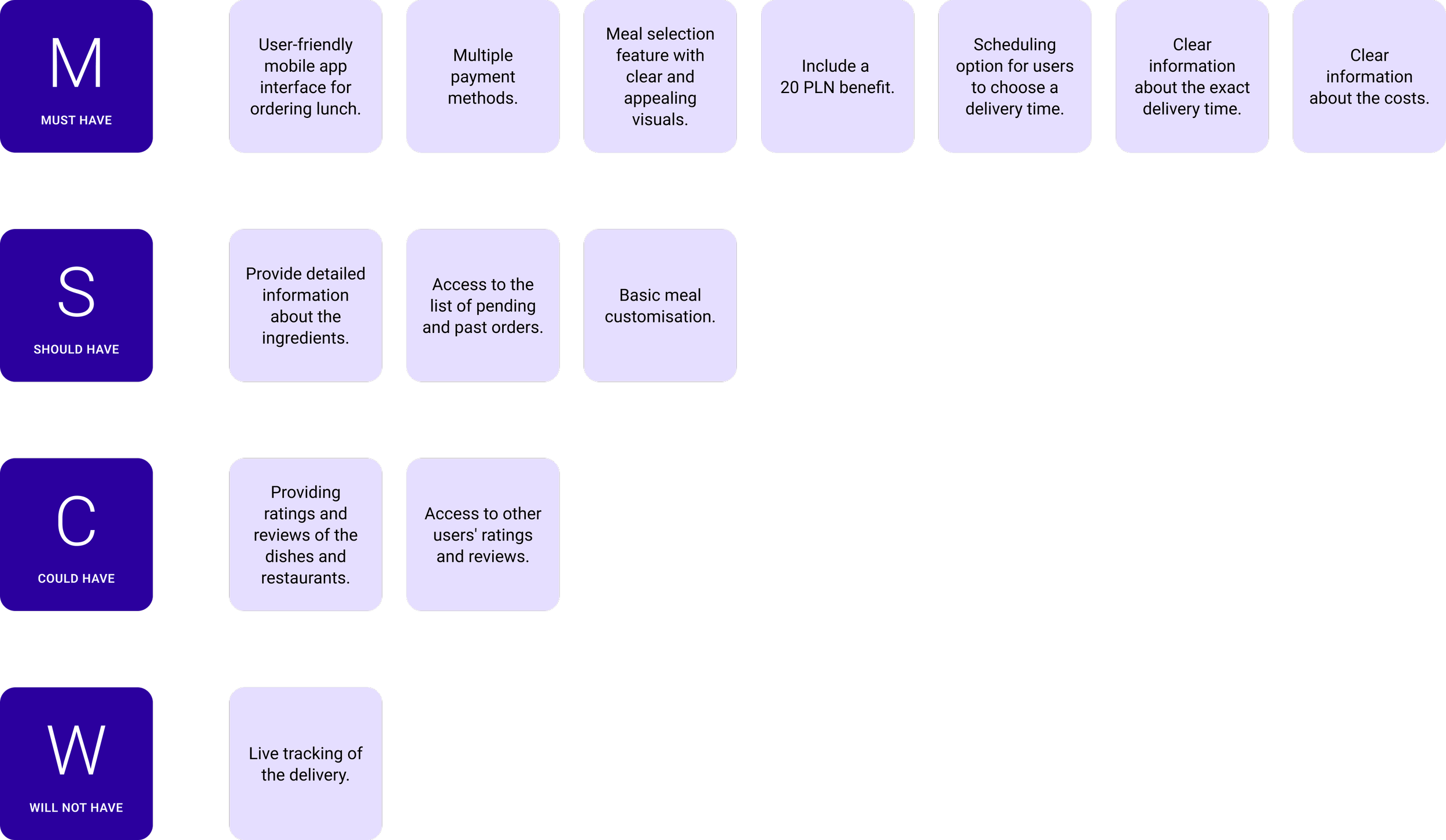
MoSCoW Prioritisation is utilised in the early phases of product design to focus on essential features (Must-haves) and distinguish them from desirable but non-critical ones (Should-haves and Could-haves). I choose this framework to manage the scope, prioritise most crucial aspects of the application.
IDEATION
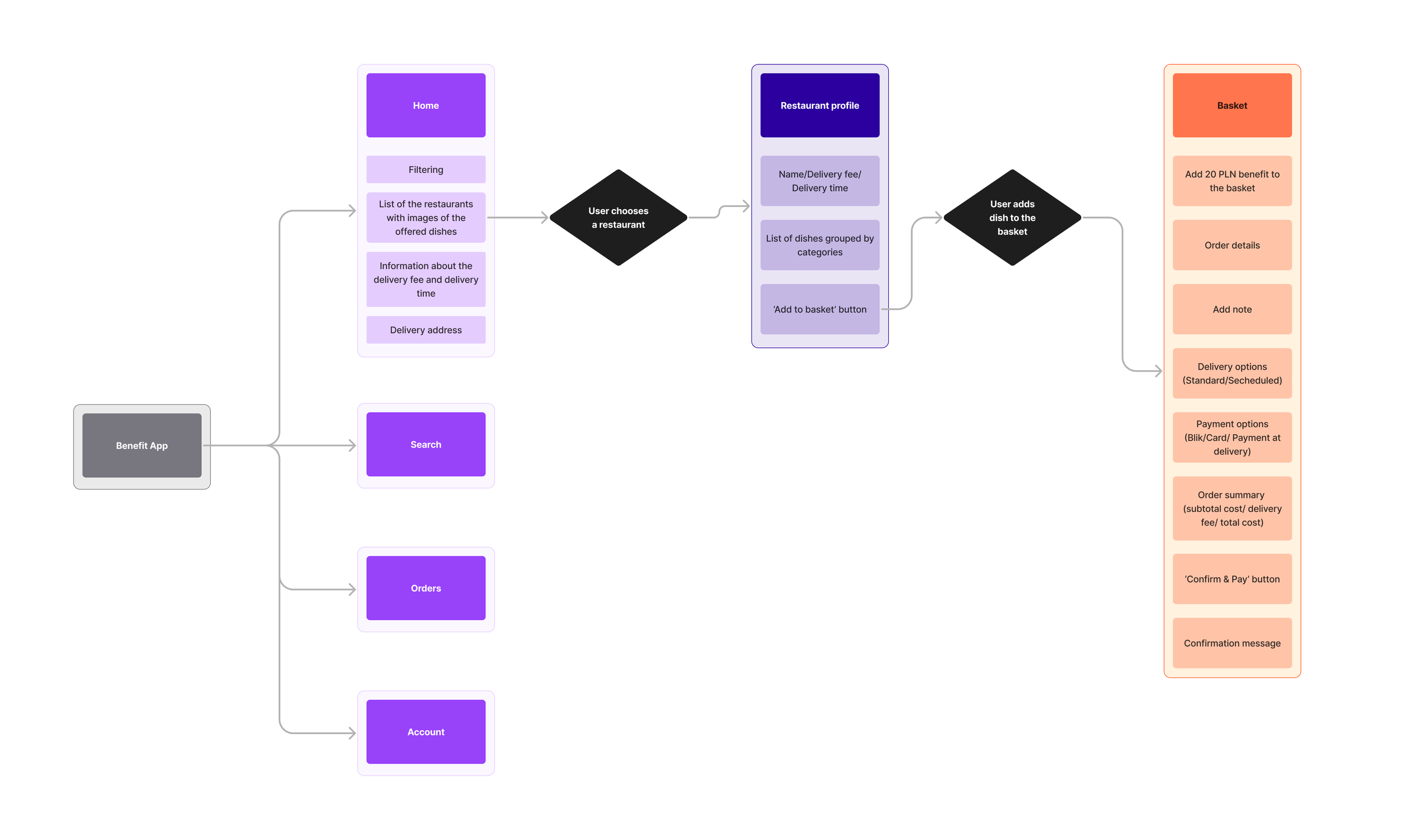
User Flow
WIREFRAMES
Lo-Fi Designs
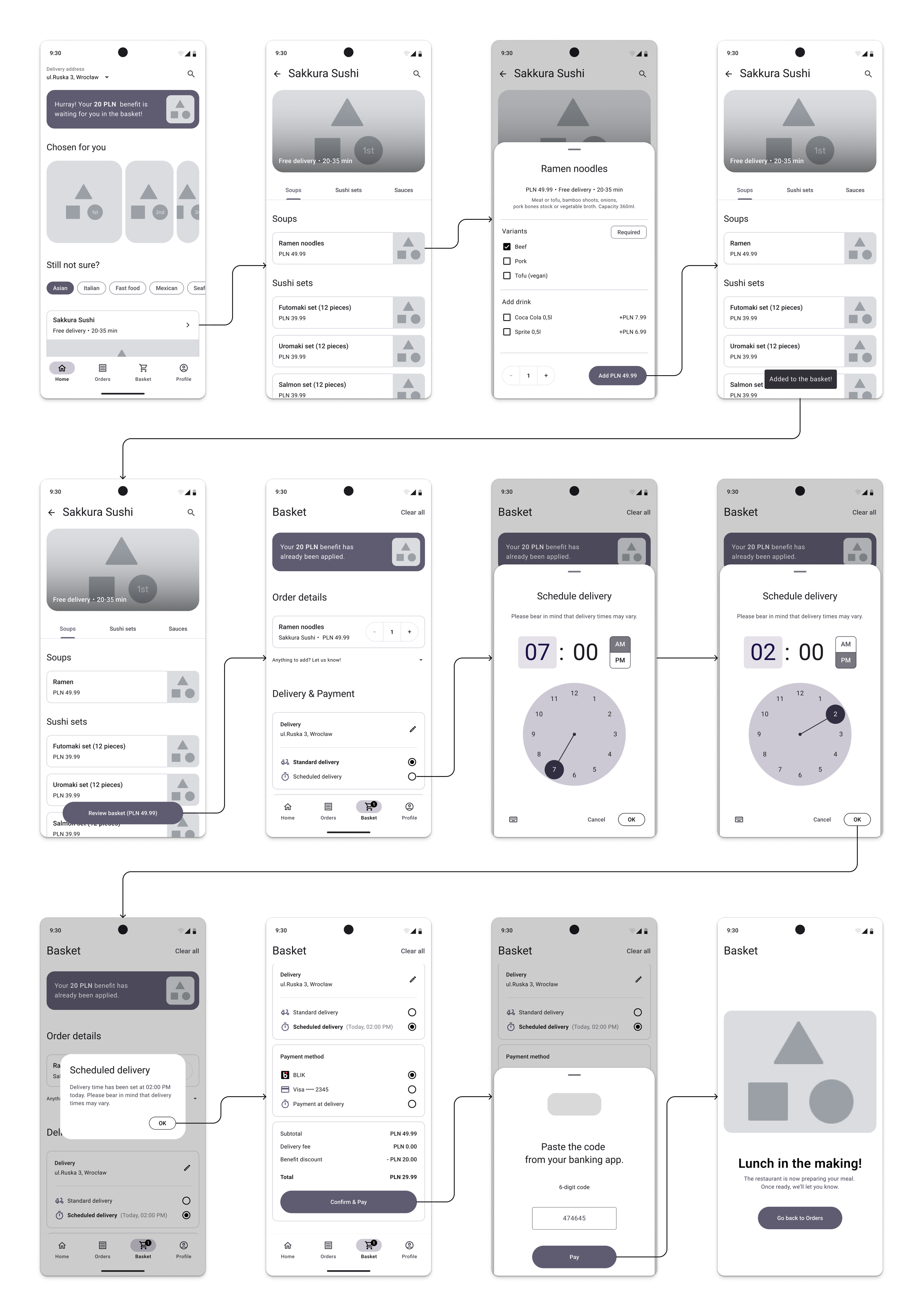
HIGH FIDELITY DESIGN
Application redesign